
Go to:
Pregnant & Having a Planned C-section? Get Ahead of a “C-section Shelf”
0–6 Weeks Post-C-Section: The MOST effective time to “get rid of the C-section Shelf”
6 Weeks to 1 Year Post-C-Section: Your Critical Healing Stage
12 Months Post-C-Section and Beyond: It’s Not Too Late to Change Your C-Section Shelf
Scar Massage vs. Fascial Massage: Why C-section Massage Techniques Must Involve Both
When to Seek Additional Support
Your Next Steps for C-Section Shelf Healing
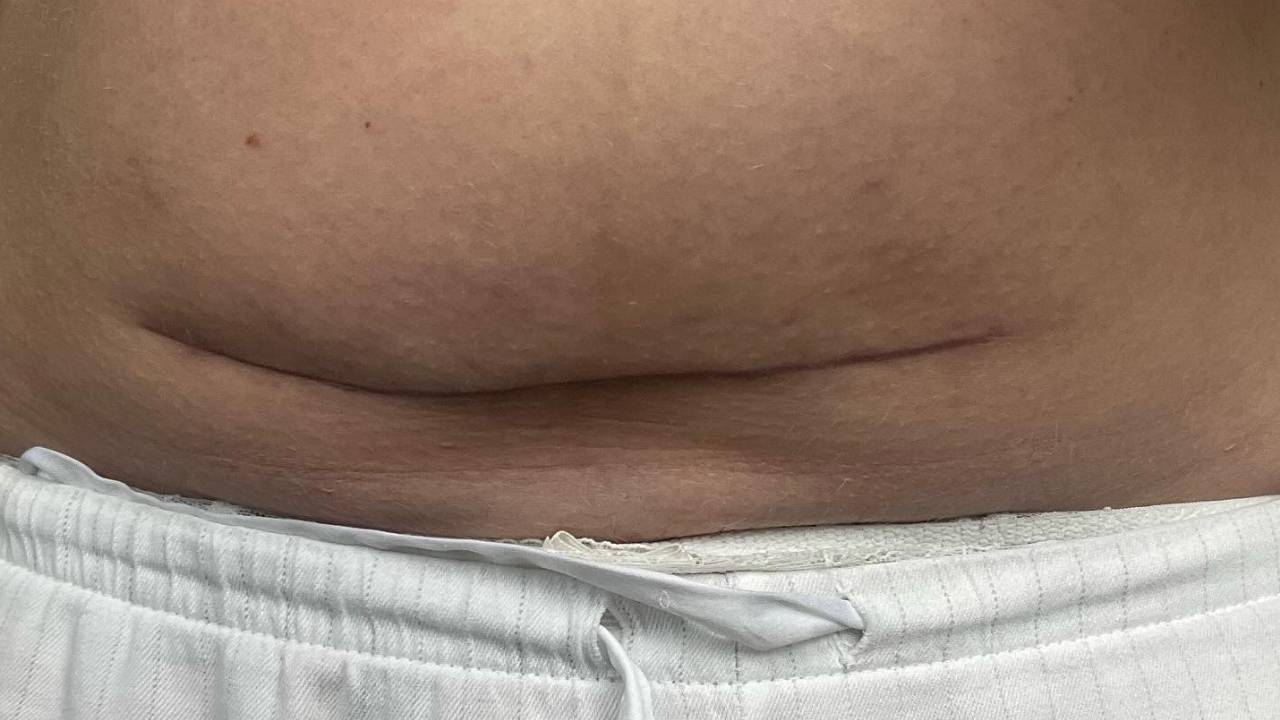
Let’s talk honestly about the changes to your belly appearance after a C-section (or, Cesarean birth).
That overhang.
The indented scar.
The loose skin.
The “C-section Shelf.”
Many moms feel surprised, frustrated, or confused when they experience these changes after surgery — especially when recovery doesn’t automatically make it disappear.
If you’ve been wondering:
- what causes a C-section shelf
- why it still hasn’t improved
- or whether anything can actually help…
you are far from alone. ❤️🩹
Nearly every C-section mama experiences some degree of “shelving” during postpartum recovery.
But here’s what most people AREN’T told, and what I want you to know, as a C-section therapist to 1000’s of moms:
The causes — and the solutions — change dramatically depending on where you are in your healing journey!
Therefore, understanding what causes a C-section shelf is the first step toward supporting your C-section recovery more effectively and compassionately.
So, “Bookmark” this page, because this is the one article that will break it all down into simple, digestible pieces:
- how C-section recovery changes month by month
- what contributes to a C-section shelf in different healing phases
- what actually helps…
- …and what often doesn’t
What Is a C-Section Shelf?
A “C-section shelf” refers to the area of tissue, skin, or abdominal fullness that may protrude/fold over the external C-section scar.
Some moms describe it as:
- Cesarean overhang, belly/stomach overhang
- C-section pouch, lower belly pouch
- Apron belly after C-section
- C-section belly, C-section tummy
And while it’s extremely common, many women are caught off guard by how different their abdomen can feel and look postpartum.
A C-section shelf is often NOT simply about:
- Fat
- Excess /loose skin
- weight gain
- lack of exercise
Instead, from a musculoskeletal standpoint, it usually involves a combination of:
- swelling
- scar tissue that is tight or stuck (adhesed)
- Poor core control – diastasis, pelvic floor dysfunction, poor breathing patterns, postural changes
- core weakness
- connective tissue healing
There are also non-musculoskeletal factors that can cause a C-section Shelf including:
- Hormonal changes
- Sleep changes – often chronic sleep deprivation or poor sleep quality
- Mental health factors – anxiety, depression, etc
- Stress – can include physical AND emotional stress; stress from relationships, work, lifestyle, community connection
These things above cannot be overstated 💜but for the purposes of this article, I will stick to musculoskeletal contributors and what you can do about them.
Pregnant & Having a Planned C-section? Get Ahead of a “C-section Shelf”
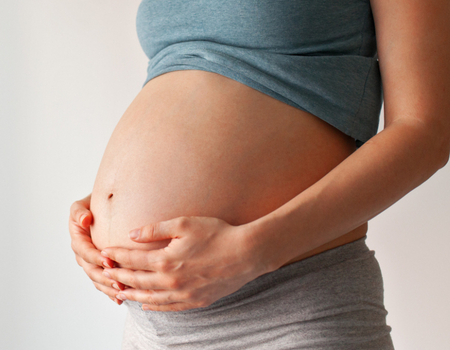
Athletes having a planned knee surgery know to do their exercises before surgery.
Why?
Because this ensures the best possible recovery.
C-section is no different.
So, if you’re still pregnant, truly you have the best opportunity to mitigate that C-section shelf even before it starts. Read on.
What Causes a C-Section Shelf Before Your C-Section
Alright, let’s nip this in the bud! Even before surgery happens, some factors may increase C-section Shelf formation later on.
These include:
- lack of compression planning (postpartum belly wrap and compression garments)
- untrained deep core muscles that struggle to “wake up” after surgery
- Lack of strategies/ modification of living space
- No one to help after surgery, or know HOW to help after surgery
Women are often never taught how important prep can be for postpartum healing – so let’s change this now.
What Actually Helps Reduce a C-Section Shelf During Pregnancy ✅
1. Prepare Belly Wraps & compression garments ahead of time
Research them. Get them. Learn how to use them. Bring your wrap to the hospital. Having proper compression starting Day 1 can make a huge difference in your swelling, C-section Shelf formation, and ultimately, how fast (or slow) your recovery will be.
Click here to learn more about my favourite compression garment, which can be used about 2-3 weeks after birth, and throughout your return to activity, exercise, and sport. Make sure you choose the “Csection Shorts + silicone patches”. For 10% off use code “Janette*Yee”
2. Learn gentle core activation exercises before surgery
You’ve heard of prenatal yoga, prenatal pilates, prenatal workouts – they all have one thing in common. Core activation. Understanding how to connect with your deep core muscles BEFORE surgery will enable you to reconnect them AFTER surgery.
3. Prepare your home
Have a lot of stairs? These won’t help after surgery. Have a low bed? It will hurt getting in and out of it. Are necessary “things” hard to reach? You won’t be able to reach high or low for days/weeks after surgery. Setting up your home for success decreases the risk of injury.
4. Prepare your support system
Similar to preparing for a vaginal birth, mamas will often attend “prenatal classes” with their partners/support person. Prepping for a C-section is no different. You cannot be the only one who knows how to help YOU after surgery – that’s your Helper’s job!
My advice: take a Prenatal C-section program at your hospital. Don’t have one? Scroll down to the bottom of this article to learn more about mine.
What does NOT Help with a C-Section Shelf Before Birth❌
The following is what most mamas do — and I want to be clear, my intention is NOT to make anyone feel like they did it “wrong.” Most mamas have no idea what to do, because they’re never taught. They’re doing their best while growing a human, working, and often caring for other kids at the same time. It’s a lot. Here’s what I commonly see:
- Waiting until 6 weeks postpartum to start recovery. Many doctors tell mamas “to do nothing” until the 6-week checkup — but that advice is about surgical clearance, not about whether prep and gentle groundwork can happen sooner.
- Relying on quick-fixes. Waist trainers, “bounce back” wraps, and viral 10-minute-ab videos may promise results, but they skip the actual rehab your body needs after major surgery.
- Assuming the hospital will guide complete recovery care. Hospitals are (rightfully) focused on keeping you and baby safe through delivery — postpartum rehab education is rarely part of that conversation.
- Following random advice online, through social media, or from AI. It’s tempting to Google your way through this, but generic advice can’t account for your specific healing timeline, your specific body, or your specific C-section.
…but just because these things are commonly done, it doesn’t mean they’re the right things to do. 🙏
In other words: AFTER surgery is not the ideal time to learn how to recover. BEFORE surgery is. 👍
0–6 Weeks Post-C-Section: The MOST effective time to “get rid of the C-section Shelf”
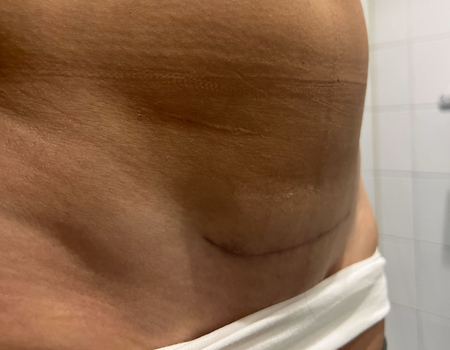
OK, Mama…listen up.
If you were my best girlfriend and you just had your C-section, here’s what I’d tell you:
“I KNOW it’s so overwhelming right now.
I KNOW you’re trying to figure out all the things all at once and it’s SO MUCH.
I KNOW you’re in a ton of pain and you can’t even do the simplest things.
BUT you told me how scared you were about not recognizing your body after surgery, and how your belly would never be the same again.
Girl.
Put aside 5 minutes right now – yes, just 5 minutes – and do the rehab I’m about to tell you.
This stuff is so simple, you’ll be doubtful they will even make a difference.
But these tips will change everything.”
So, pretend I’m your best girlfriend – and read on.
What Causes a C-Section Shelf in the First 6 Weeks After a C-Section
In the first weeks postpartum, the biggest cause of the C-section Shelf is swelling.
There’s also scar tissue that’s forming tight and getting stuck down, as well as loose skin/extra fat/weak hanging muscles… but the biggest reason is SWELLING.
Now that you know the cause, let’s list the solutions.
“Getting Rid of” a C-Section Shelf in the First 6 Weeks After a C-Section: What Actually Works
Your C-section causes swelling, and swelling causes a C-section Shelf. But the funny thing is that there are other factors that contribute to more swelling, so we’ll have to mitigate those factors too.
1. Proper compression from the beginning
The right belly wrap/compression garment used the right way will make a massive difference in your swelling, and therefore the C-section Shelf. Period. If you did nothing else in these first 6 weeks, you’ll still have a faster and better recovery just by managing your swelling.
2. Gentle core reconnection
Do you feel like your body isn’t even attached anymore after surgery? Like you don’t have any ability to use your abs? Well, this is completely common – after all, you were cut open right down to the middle of your body.
Solution: gentle exercises that “reconnect your muscles to your brain”. Things like belly breathing are a safe exercise, and make a huge difference.
BONUS: these exercises also help with pumping out the swelling in your abdomen, which in turn decreases the C-section shelf.
3. Gentle movement and circulation
You may be in a lot of pain during this stage – and relaxing and being gentle with yourself in the first few weeks is necessary to not reinjure your healing abdominals.
However, chronic immobility can contribute to stiffness, further pain, scar restriction, and pooling of swelling.
Meaning – not moving will contribute to more C-section Shelf. I’ve worked with C-section moms who report a Shelf forming weeks AFTER surgery, when things had been looking good at the start.
Solution: gentle movement like arm raises and 1 minute slow walks.
Caution: This stage is not about intense workouts. It’s about helping the nervous system reconnect with the deep abdominal muscles safely.
4. Early scar mobility at the RIGHT time
Yes, tight scar tissue contributes to the C-section Shelf – but in the first 6 weeks, it’s a delicate dance between 100% protection of the early forming scar tissue and transitioning safely to making that scar tissue move without injuring it.
This is why in general direct scar massage isn’t indicated in the first 6 weeks. That being said, the gentle exercises described above will absolutely reduce scar tissue restriction, and encourage it to form with the right length and tension from the start.
What DOESN’T Help a C-Section Shelf 0-6 weeks postpartum ❌
OK, sister — I’m continuing my real talk. The items below are what I see all the time with the 1000’s of mamas I help.
Don’t do these things, if you can help it. These do NOT help your C-section recovery — as a matter of fact, they can actively hinder it:
- Doing nothing in the first 6 weeks because the hospital never suggested anything. Silence from your care team doesn’t mean there’s nothing safe or helpful you can be doing.
- Strict bed rest without any movement (aggressive “confinement” practices). Total stillness can contribute to stiffness, scar restriction, and pooling of swelling — the opposite of what you want.
- Resting and doing nothing else. Rest matters, but rest alone, without any gentle movement or core reconnection, can leave you further behind by week 6.
- Thinking recovery is “done” at the 6-week checkup. That appointment clears you medically — it doesn’t mean your rehab is complete.
- Aggressive abdominal exercises. Jumping into intense core work too soon can overload tissue that isn’t ready for it yet.
- Premature return to the gym and “regular exercises.” Your pre-baby workout routine was designed for a body that didn’t just have major surgery.
- Using belly binders or ab wraps incorrectly. Wearing compression the wrong way (or for the wrong reason) can create dependency instead of support.
- Returning to running too soon. High-impact movement before your core and pelvic floor are ready can set recovery back, and maybe even create new problems (commonly, incontinence!)
For mamas who are fearful after surgery — I encourage you to move, even just a little bit each day. You’ll be surprised at how quickly your body will feel better.
And for mamas who are stubborn athletes like me 😅 — listen to your body. Rest IS recovery. You have the rest of your life to lift weights and go for a run.
6 Weeks to 1 Year Post-C-Section: Your Critical Healing Stage

Let’s understand one thing about our good friend, Scar Tissue. It is like super glue. It is designed to be tight and stuck, and thank goodness for that! We don’t want our incisions opening up ever again. So, starting today, let’s stop giving Scar Tissue a bad rap. It’s a helpful friend. 👍
Now, here’s the thing about Scar Tissue. “Tight and stuck” isn’t helpful if it’s too tight, or stuck to things it’s not supposed to be stuck to.
What can you do about this?
In a word: Scar Massage. You can greatly impact this in the first 6 months, otherwise known as the Critical Healing Period. After 6 months, scar tissue is largely set, and gets tougher and tougher to change (with your bare hands) as time goes on.
Let’s learn about how scar tissue plays a role in the C-section Shelf in this stage of healing, what you can do about it, and what won’t help.
What Causes a C-Section Shelf to Persist 6 Weeks to 1 Year After a C-Section
This time period is often when frustration increases, because the Shelf still hasn’t improved as expected. Or, a Shelf appears during this time, where there wasn’t one to begin with – nor was there one after the first C-section!
As I mentioned at the beginning of this article, there are different causes of the C-section shelf in each stage of healing. So let’s list some of the musculoskeletal causes between 6 weeks and 12 months post C-section:
- Swelling decreases and makes loose skin/extra fat/hanging tissue more obvious
- scar tissue restrictions begin to set in
- diastasis recti + poor core coordination
- Persistent weakness (i.e. lack of “tone”) in superficial abdominal muscles
- Poor posture
While there is a solution for each of these causes, C-section scar massage alone will make changes in all of them. Keep reading.ressed.
What Actually “Gets Rid of” a C-Section Shelf 6 Weeks to 1 Year After a C-Section ✅
(includes the scar malleability facts — first 6 months = biggest window for hands-on change, efficacy decreases after but professional tools/clinician can still help)
1. Scar massage and scar mobility work
I’ve said this a few times but I’ll say it again: during this Critical Healing Phase (first 6 months post C-section), scar massage will be most effective in permanently changing scar tissue. While there are other causes of the C-section shelf during this period, honestly if there’s only 1 thing you have time for, focus on scar massage. You’ll never get this window back again!
When scar tissue is fresh, it’s softer and more moldable — like Play-Doh right out of the container. As time passes, it becomes denser and more set, the way Play-Doh dries out if you leave it out. That doesn’t mean change becomes impossible. It simply means earlier intervention is usually easier than later intervention.
2. Core retraining exercises
“Core retraining” is different from “core strengthening”. “Core retraining” refers to the ability for your brain to automatically (and properly) control Alignment, Breathing, and the muscles of your core during movement.
During this phase, continue to build on your foundational blocks that you started in the first 6 weeks postpartum. Didn’t start then? That’s OK – let’s do it now and create a Good Habit from the start.
Exercise examples include:
- Wall Planks with Athletic Breathing
- Wall Posture with 5lb arm curls
- Glute bridges
- Toe Taps
Focusing on coordination and function at this point is far more beneficial than high-intensity workouts.
P.S. When I work with a C-section mom, most report instant improvement with core connection immediately after scar massage – especially in the first 6 months postpartum. Try it out!
3. Core strengthening exercises
Strength exercises for the abdominal muscles after C-section is a MUST. Many mamas receive the messaging that “it’s unsafe to do planks and sit ups after C-section – forever”. And that, my friend, is simply NOT TRUE.
Imagine breaking your leg and never using it to walk again! Well, opening up your core and never using it for what it was designed to do (bracing and bending) is just as ridiculous.
In my world, C-section mamas are taught this simple formula:
- Do a scar massage
- Follow it immediately with a core retraining exercise
- Follow that with at least 1 strength exercise.
Progress this mini program. Do it every day. Within a year your body will be transformed.
4. Rest and nervous system support
As a C-section Athletic Therapist, the one thing I always tell my mamas is this: no Rehab Program in the world can optimize your healing IF you’re not getting the sleep and rest you need.
Recovery is heavily affected by deep sleep, regular sleep, and the average adult human requires 7 hours per day. This will not only help your body physically heal, but it will downregulate your nervous system.
On the flip side, recovery is negatively impacted by stress, exhaustion, and sleep deprivation. Your nervous system will remain in an elevated “fight or flight” state.
Now, here’s the caveat. How long it takes to heal fully from C-section varies a ton from person to person. Why? Because recovery depends on something we don’t always have control over: sleep. 😳
So, mobilize the help you deserve to protect your sleep. And, be kind to yourself 💜
What Doesn’t Help a C-Section Shelf 6 Weeks to 1 Year After a C-Section ❌
Here are my top “what doesn’t help a C-section Shelf” tips for the first year postpartum.
- Generic “bounce back” fitness programs. Focussing on “getting rid of the mummy tummy” instead of the surgical rehab that creates a solid core foundation truly can set you back months, even years. As a former competitive rugby player and runner, I get it. You may need to get back to “normal workouts” to feel like yourself again. But here is where patience wins. Do the right work and do it from the start.
- Crash dieting. While nutrition plays a big role in postpartum recovery, calorie restriction or other “weight loss” focussed diets will not only NOT help your C-section Shelf, but it may prolong healing. Now is the time to fuel your body with the nutrients required to rebuild a very depleted system. AND if you’re breastfeeding, this will require additional nutrient-rich intake.
- Prolonged use of postpartum belly binders/ compression garments. The primary job of compression is to manage swelling. If you don’t have swelling, don’t use compression. Chronic use may cause eventual weakness of the core muscle, creating a physical and emotional dependency on external support. I remember working with a mama who after her 5th C-section was still wearing compression pants months later. With focussed core exercises, she was able to wean herself off compression only 4 weeks later.
12 Months Post-C-Section and Beyond: It’s Not Too Late to Change Your C-Section Shelf
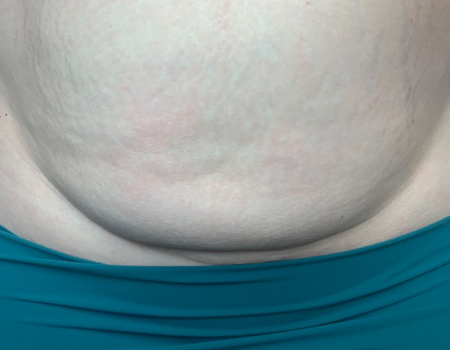
Here’s something I want you to really hear, mama, especially if you’re reading this at 2 years, 5 years, or even decades postpartum: you did not miss your window.
I know it might feel that way. I know you might have Googled “is it too late” more than once, half-hoping and half-dreading the answer. So let me be your Athletic Therapist friend for a second and just tell you straight:
The tools change after the 1-year mark. The opportunity does not disappear.
What Causes a C-Section Shelf to Persist After 1 Year
By this stage, the C-section shelf that remains usually isn’t “new” — it’s the layering of a few things that never fully resolved:
- scar tissue that stayed restricted,
- a core that never quite relearned how to coordinate,
- posture that’s compensated for so long it’s become your new normal, and
- fascial tissue (the connective tissue wrapping your muscles and organs) that’s tightened around all of it.
It’s rarely just one thing — it’s the accumulation.
Add to that the causes that aren’t related to physical rehabilitation – hormonal changes, diet & nutrition, emotional stress, sleep deprivation, mental health…and the C-shelf resolution after the 1 year postpartum mark becomes a little more complex.
But like I said, it’s not too late – you can still make changes from a C-section massage and exercise point of view. Keep reading to learn how.
What “Gets Rid of” a C-Section Shelf After 1 Year
1. Fascial massage becomes your primary at-home tool
Here’s the honest truth: with your own hands, scar tissue becomes much harder to meaningfully change after the 1-year mark. But fascial tissue — the connective tissue layer — stays changeable by hand at any stage, for the rest of your life. That’s genuinely good news. Fascial massage, done consistently, can still make a real difference in how your shelf looks and feels.
2. Core retraining and Postural work
Years of protecting your midsection, feeding, carrying kids, and compensating can quietly reshape your posture. Untraining those patterns can shift how your belly appears, independent of anything happening at the scar itself.
3. Core strengthening, not just “core awareness”
If your core and posture has a solid foundation, real strength work is needed. Strong muscles in the ENTIRE body (including your abs!) changes how your abdomen sits and how your body holds itself — both of which directly affect the appearance of a C-section shelf.
4. Professional or tool-assisted scar work, if you want to go further
This is the piece most mamas never hear: scar tissue is not “dead” after a year. It’s just harder to shift with bare hands alone. Clinicians (myself included) use tools like the Dolphin MPS device to create change in scar tissue long after the 1-year mark. If you’ve been told “there’s nothing more you can do” — that’s not accurate.
Please note: there is a proper way to use the Dolphin MPS, or scar release therapy. The tool itself takes about 20 minutes to use; for it to be effective, this MUST be followed by advanced scar massage techniques, then by exercise. Without this 3-pronged approach, the Dolphin MPS will not be very effective, and/or changes may be only temporary.
What Doesn’t Help a C-Section Shelf After 1 Year ❌
Believing it’s permanent and giving up on it entirely. This is the single most common — and most inaccurate — belief I hear from mamas years out. Your tissue is still capable of change. And remember – fascial massage can still be highly effective at this stage.
Chasing “get rid of the shelf” quick fixes like shapewear or only focusing on weight loss. These mask the shelf temporarily without addressing why it’s there.
Endless crunches or isolated ab exercises. Isolated reps without coordination or postural context rarely move the needle.
Ignoring posture as part of the picture. Focusing only on the scar itself while ignoring how you stand, sit, and carry your body leaves half the equation untouched.
Ignoring stress and nervous system load. Chronic stress keeps your body in a state that works against tissue healing and recovery, no matter how many exercises you do.
Scar Massage vs. Fascial Massage: Why C-section Massage Techniques Must Involve Both
Remember at the start of this article, I mentioned that the causes of the C-section Shelf — and the solutions — change depending on where you are in your healing journey? This is where I explain exactly what I mean.
“C-section Scar massage” is the term most mamas search for online — and I use it too, because that’s the language people actually search and understand.
But clinically, it only refers to one type of tissue: the scar tissue itself. There’s a second type of tissue always involved in a C-section shelf too — fascial tissue, the connective tissue that has also been cut during surgery.
Here’s why this distinction matters:
- Scar tissue is most moldable by hand in the first 12 months (especially the first 6 months). After that, hands-only work on scar tissue becomes much harder to make meaningful change without the right tools or a professional.
- Fascial tissue stays changeable by hand at any postpartum stage — 6 weeks, 6 months or 16 years, it doesn’t matter.
So under the umbrella of what I call “C-section scar massage,” we’re almost always addressing both tissue types together — never just one, and never assuming one “replaces” the other depending on your stage. The method shifts. The possibility doesn’t.
When to Seek Additional Support
Everything in this article is meant to be a starting point — not a replacement for hands-on, individualized care. Reach out to a qualified local professional if you’re experiencing these red flags:
- Your C-section shelf comes with pain, burning, or pulling at the scar itself
- You notice a bulge, especially one that changes with coughing or straining
- You’re experiencing ongoing diastasis recti that isn’t improving with basic core work
- You feel disconnected from your core no matter how consistently you practice reconnection exercises
- The emotional weight of your changed body is affecting your daily life or mental health
Please do not “tough it out” alone. As one of my favourite movies reminds me, the bravest thing you can do is to ask for help. 💜
Your Next Steps for C-Section Shelf Healing
If you’re ready to stop guessing at what to do next to change your C-section shelf, I’d be honoured to serve on your recovery team 🙏
Consider one of my programs below:
✔️ Pregnant or up to 6 weeks postpartum?
Start with the Stage 1: Prenatal & Early Recovery Program here. ➡️ [click here]
The greatest opportunity to influence a C-section shelf is in the first six weeks, so preparing to take action from Day 1 can make a real difference.
✔️ 6 weeks to 1 year postpartum?
Start with Stage 2: C-Section Scar Massage + Diastasis Exercise Program here. ➡️ [click here]
Scar massage can begin as soon as you’re cleared by your doctor, and it can be especially impactful during this window since your scar tissue is the most moldable in the first six months. Pairing scar massage with exercise during this critical healing window = big results.
✔️ 1 year postpartum or more (even decades)? It’s not too late!
Start with Stage 3: C-Section Solutions — Your C-section Recovery Membership here. ➡️ [click here]
Even though scar tissue becomes harder to change with your hands alone after the one-year mark, fascial massage paired with exercise can still make a meaningful difference in your posture and strength, which in turn can impact your C-section shelf, including the appearance of lumpiness and skin texture.
First of all, many thanks for the information,
and your distinctive perspective. I can value this blogging site and especially this post.
At this stage, I feel I ravage much too much precious time on the net, perusing junk, effectively.
This was a refreshing switch from what I’ve known.
However, I feel that perusing other people’s thoughts is a really critical investiture of at least
some of my weekly measure of amount of time in my routine.
It’s the same as sorting through the junk heap to get the gold.
Or else, whatever illustration is effective for you.
Still, sitting in front of the pc is most likely as bad for you as smokes
and fried potato chips.
Great post,Thanks for sharing
Hi~(* ̄▽ ̄*)